Buy Authentic Handmade Pichwai Paintings Online — Original Nathdwara & Udaipur Art
Shop 100% authentic, handmade Pichwai paintings online — crafted by master artisans from Nathdwara and Udaipur, Rajasthan. Our collection features traditional themes like Shrinathji darshan, sacred Kamdhenu cows, blooming lotus motifs, Radha Krishna, and Raas Leela. Each Pichwai painting is hand-painted using natural stone pigments and pure gold foil on cloth, canvas, or wall panels. Free shipping across India.
100% Handmade Nathdwara Master Artisans Stone Pigments & Gold Foil Free Shipping Across India Secure Payment Custom Sizes Available
Every painting is 100% handmade — not printed or digitally reproduced.
Our artists are based in Nathdwara and Udaipur, Rajasthan — the historic birthplace of Pichwai art, and hold the 2022 GI-tagged tradition.
We use traditional natural stone pigments, saffron-based colours, and pure 24K gold foil.
Each painting is made to order, ensuring freshness, originality, and personal attention.
500+ original artworks sold. Certificate of Authenticity with every purchase. Worldwide shipping available.
What Is Pichwai Painting? A 400-Year-Old Sacred Art from Nathdwara
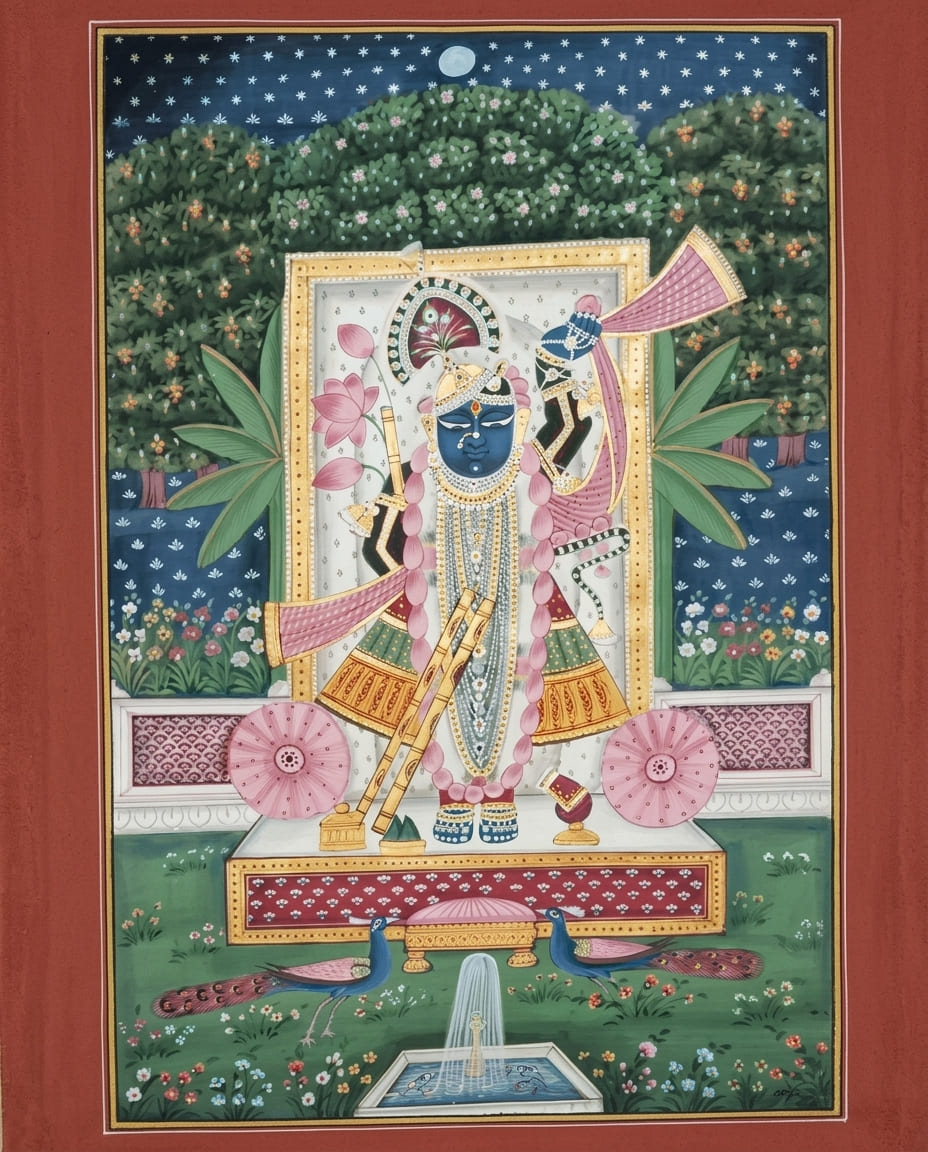
Pichwai paintings (also spelled pichhwai, pichvai, or pichhavai — all referring to the same sacred Nathdwara art form) are one of India's most revered and spiritually rich traditions, born over 400 years ago in the holy temple town of Nathdwara in Rajasthan. The word Pichwai comes from two Sanskrit-Hindi words — 'pich' meaning 'at the back' and 'wai' meaning 'fabric wall hanging'. These paintings were originally created as large, elaborate cloth backdrops hung directly behind the idol of Shrinathji — a beloved child form of Lord Krishna — inside the Nathdwara temple.
Every Pichwai painting tells a devotional story. Each artwork was designed to celebrate a specific season, festival, or event in Lord Krishna's life. The Nathdwara temple follows a tradition of displaying a different Pichwai for each occasion — from the summer lotus Pichwais (displayed to offer the deity relief from the heat) to the monsoon Morkuti Pichwais (celebrating peacocks dancing in the rain), to the Gopashtami Pichwais (honouring Krishna's role as a cowherd). In 2022, Pichwai painting received the prestigious Geographical Indication (GI) tag, officially recognising it as a traditional art form uniquely originating from Nathdwara, Rajasthan — a milestone that affirms the authenticity and cultural heritage of every handmade Pichwai. Over time, as these extraordinary artworks began to be appreciated beyond the temple walls, Pichwai art found its place in the homes, offices, and art collections of admirers worldwide.
At Rupasya, every Pichwai painting in our collection is 100% handmade by master artisans from Nathdwara and Udaipur, Rajasthan — the very towns where this tradition was born and continues to thrive. We use only traditional techniques: natural stone pigments sourced from minerals and plants, saffron and indigo for colour, squirrel-hair brushes for fine detailing, and pure 24K gold foil for divine embellishments. No digital printing. No mass production. Each painting is a singular, original work of art.
Popular Themes in Our Pichwai Paintings Collection
Our collection spans the most beloved and sought-after themes in Pichwai art. Each theme carries deep symbolic meaning and spiritual significance:
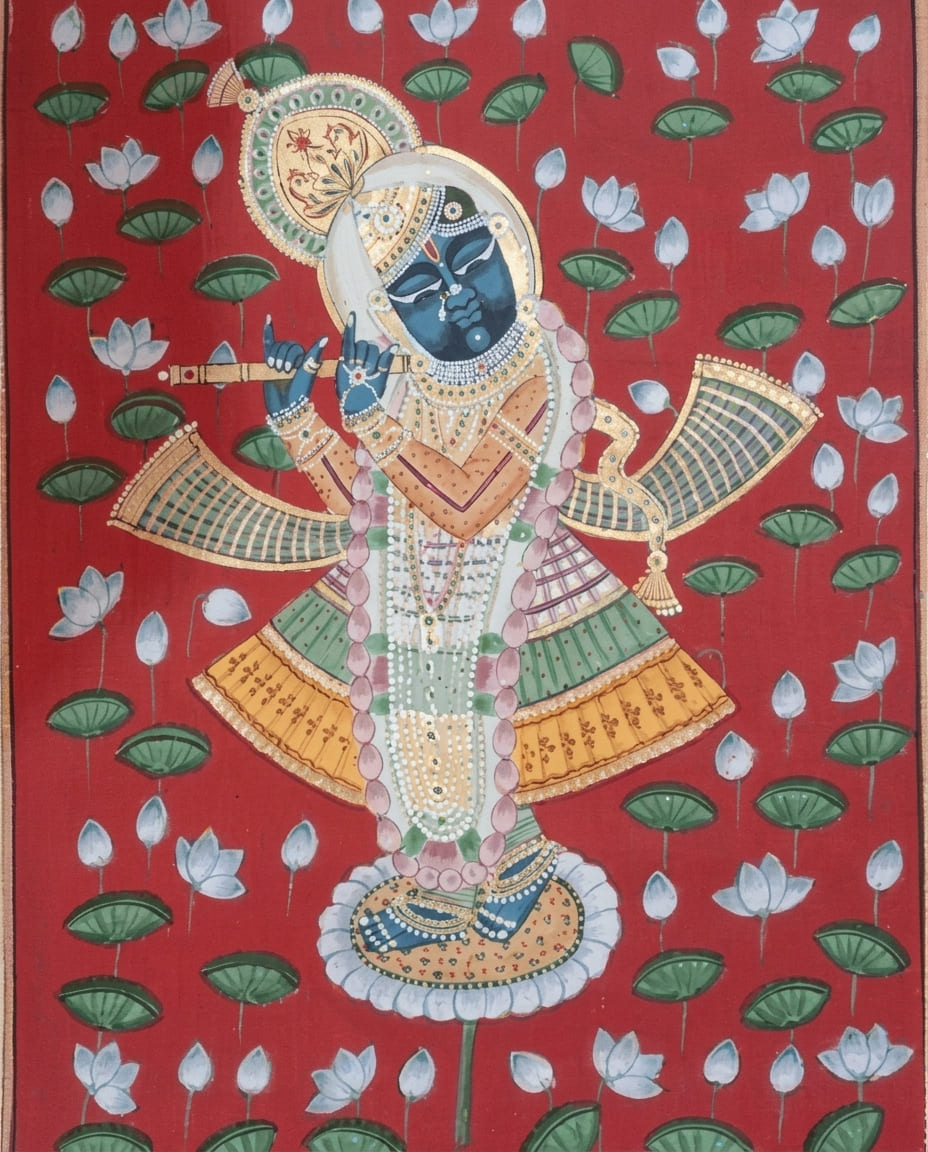
Shrinathji Pichwai Paintings
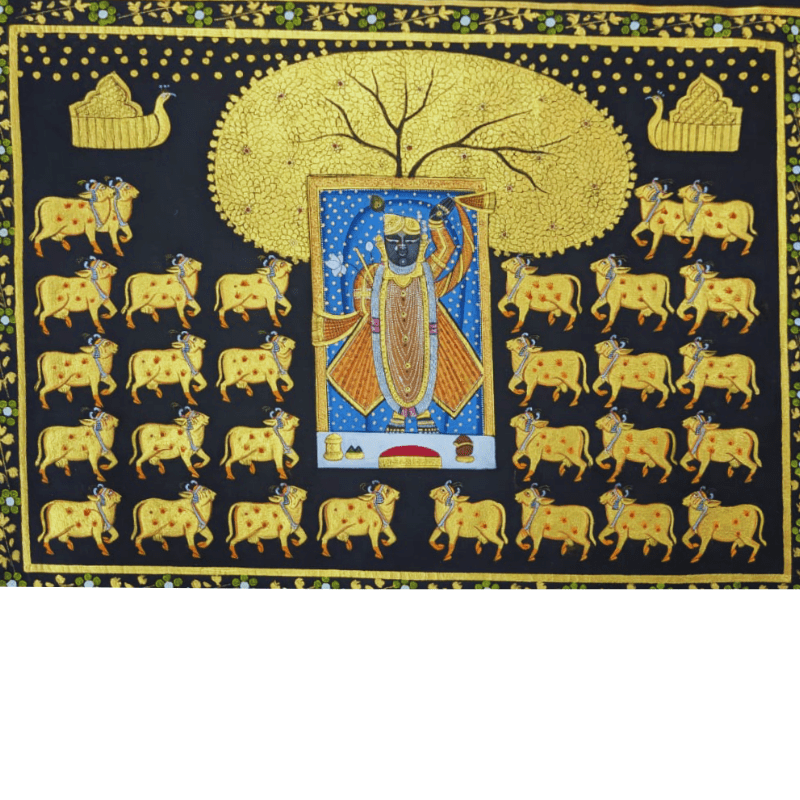
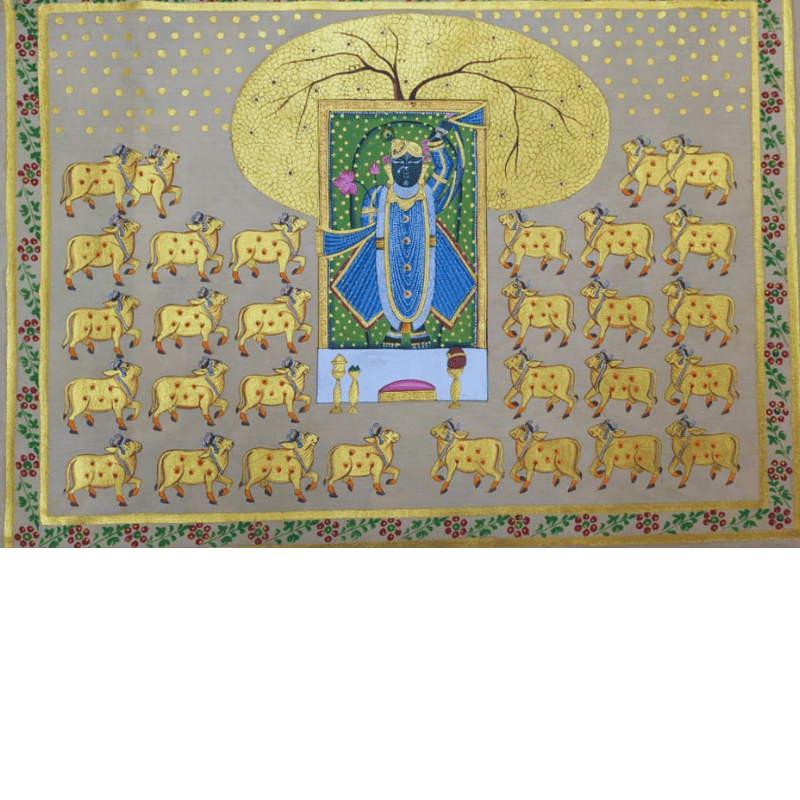
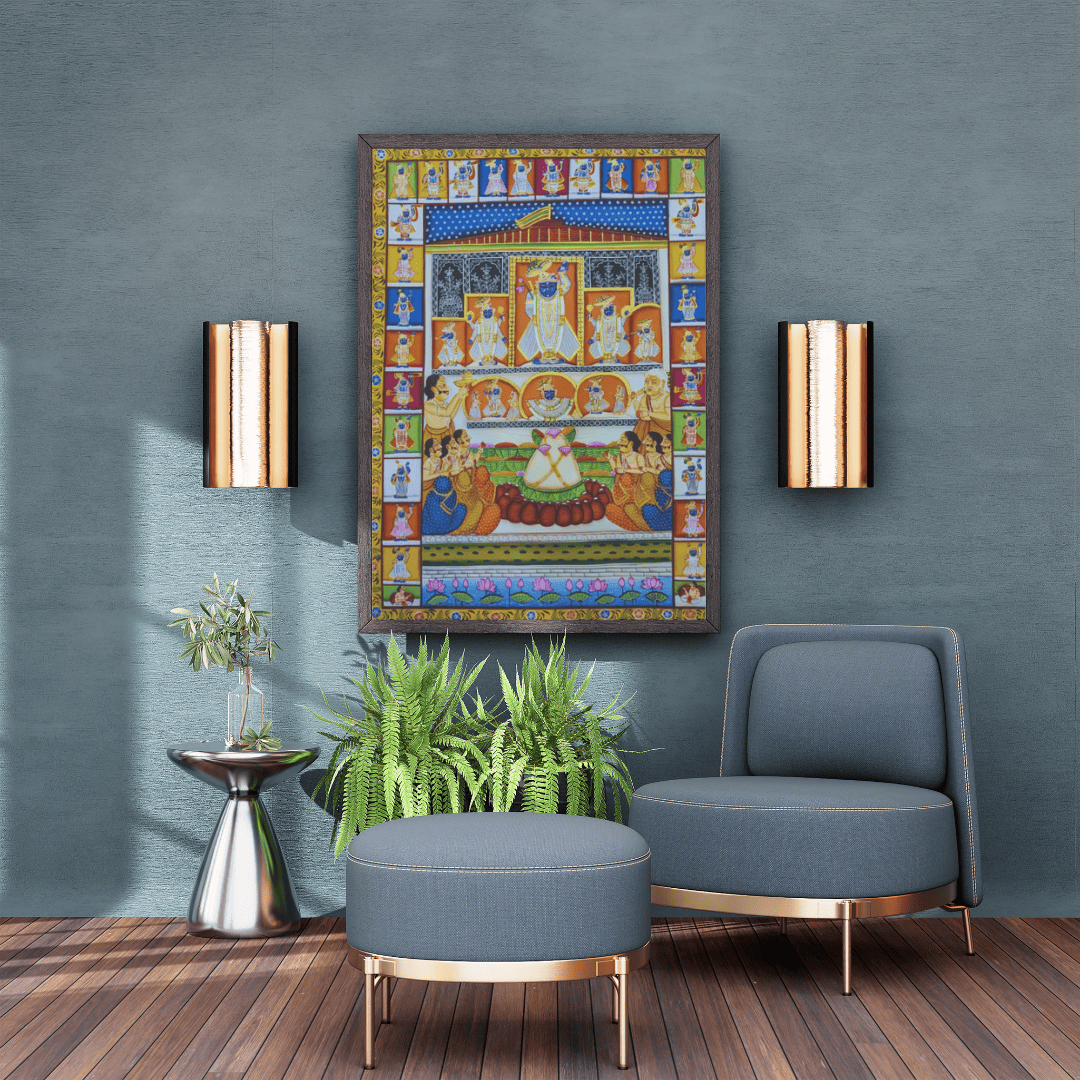
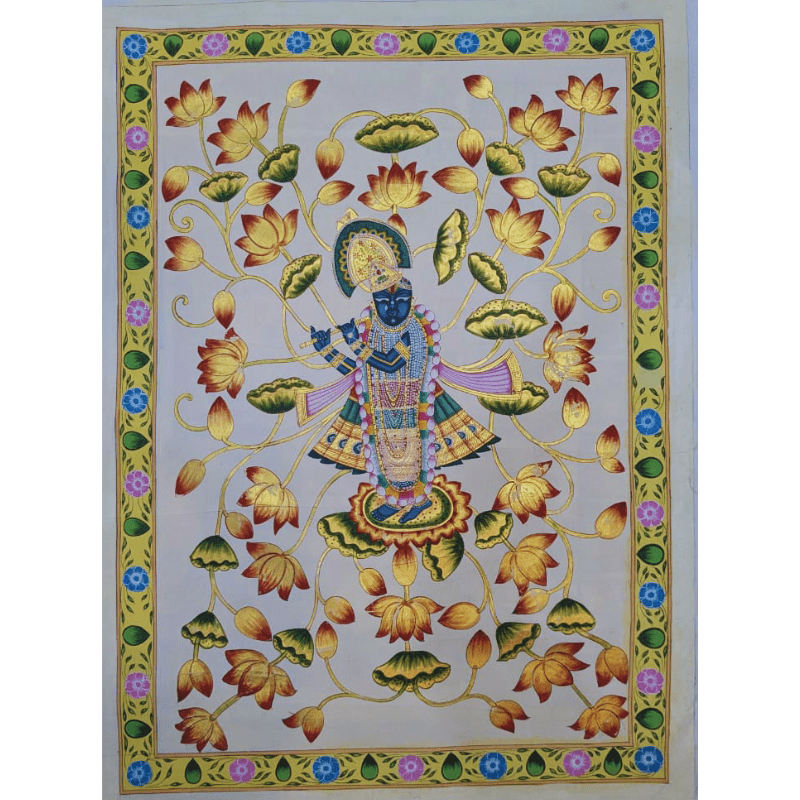
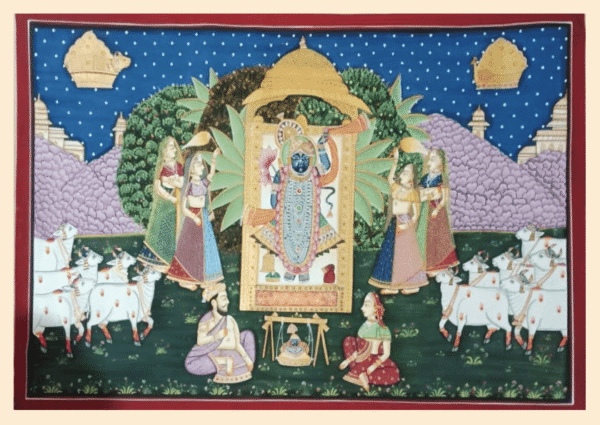
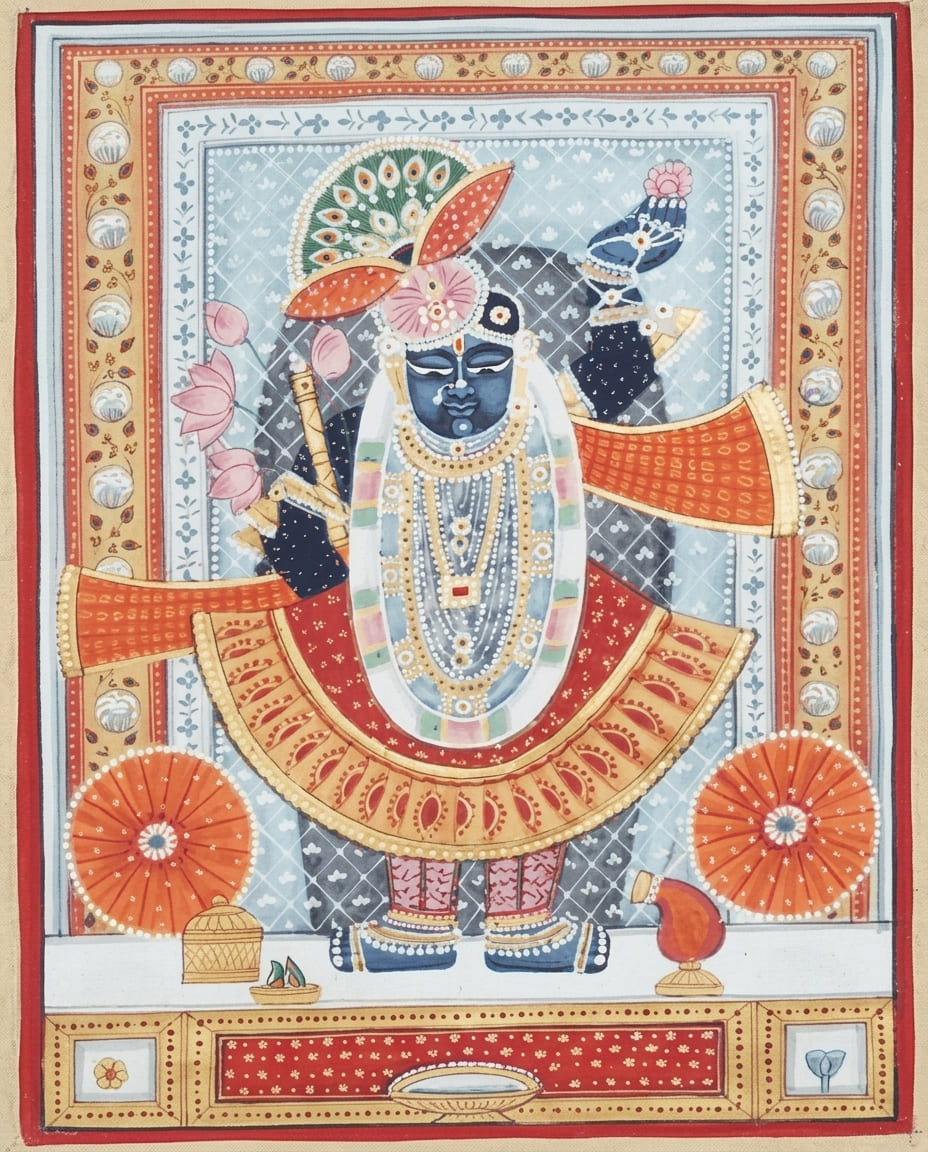
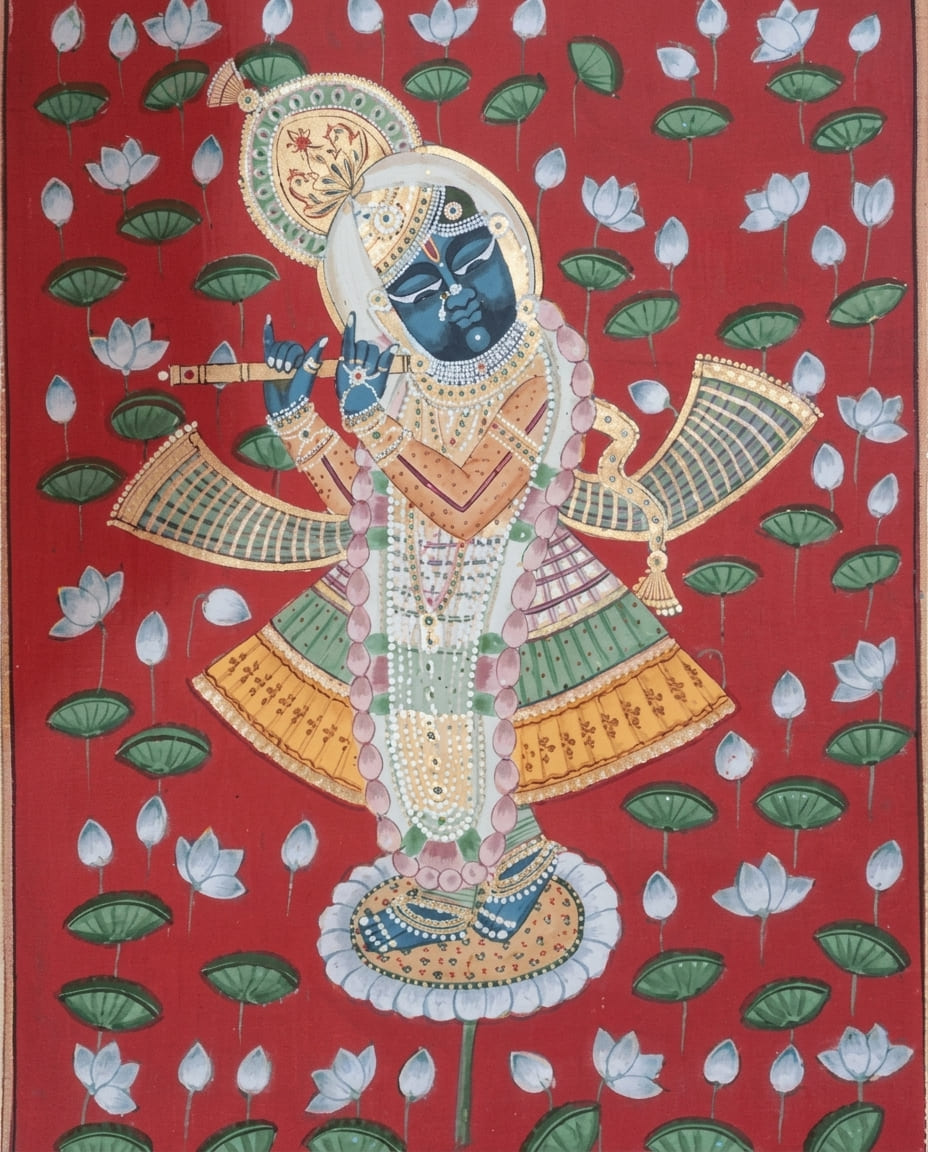
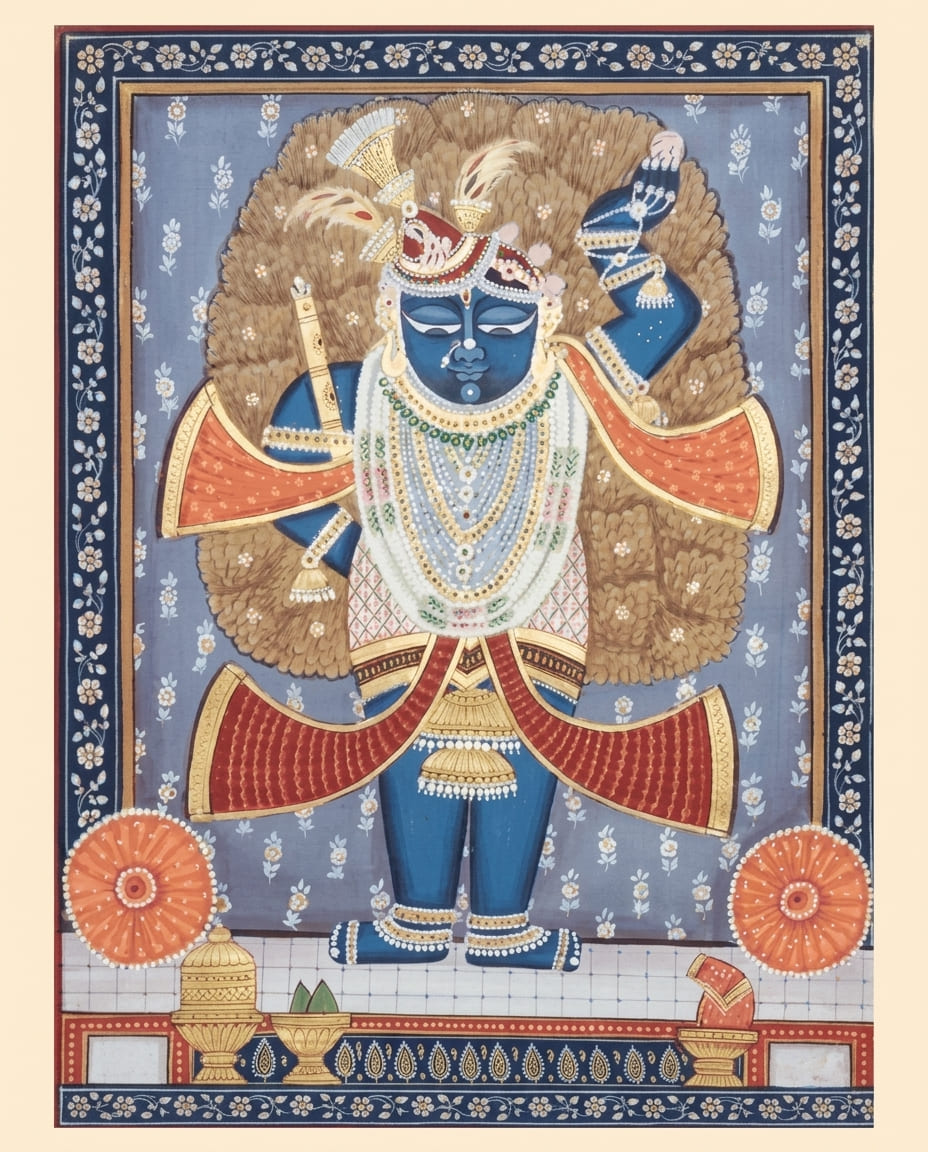
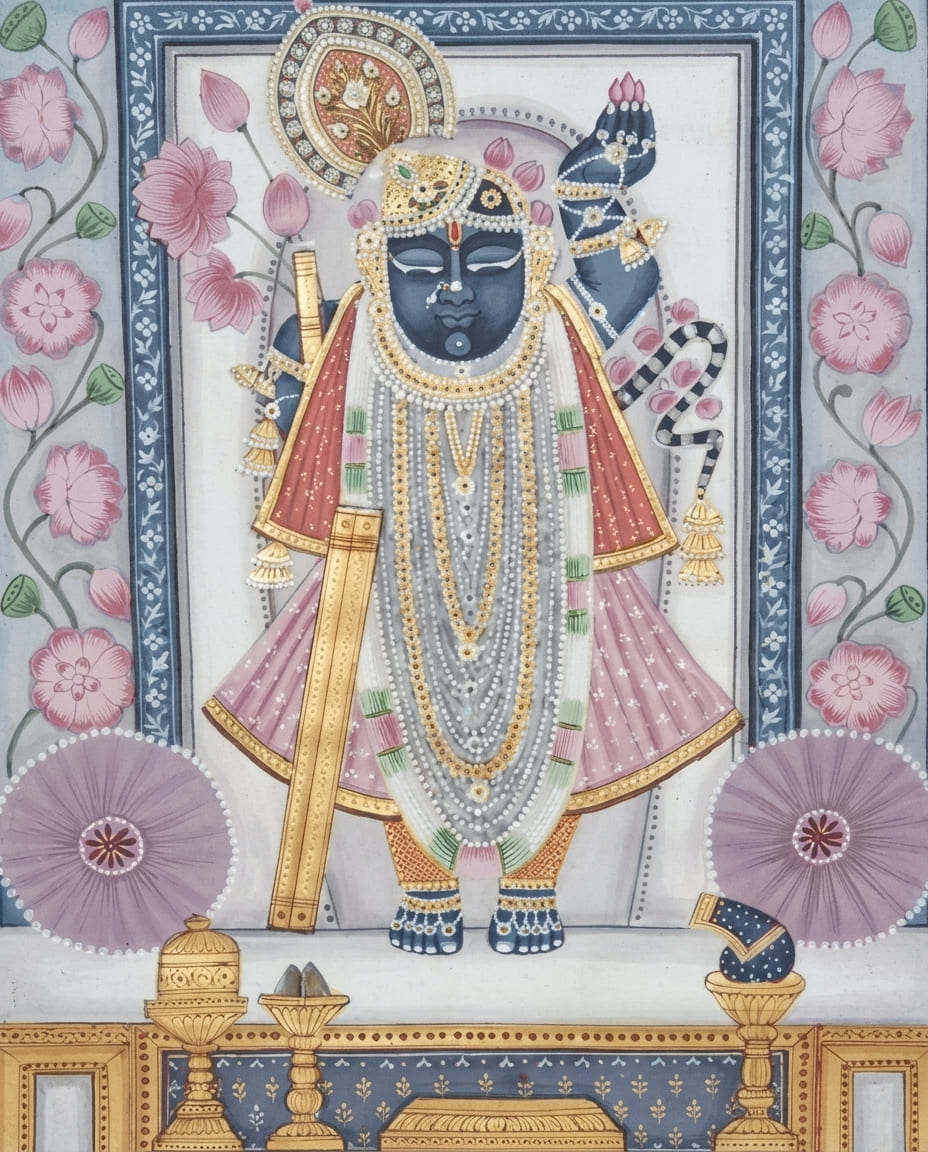
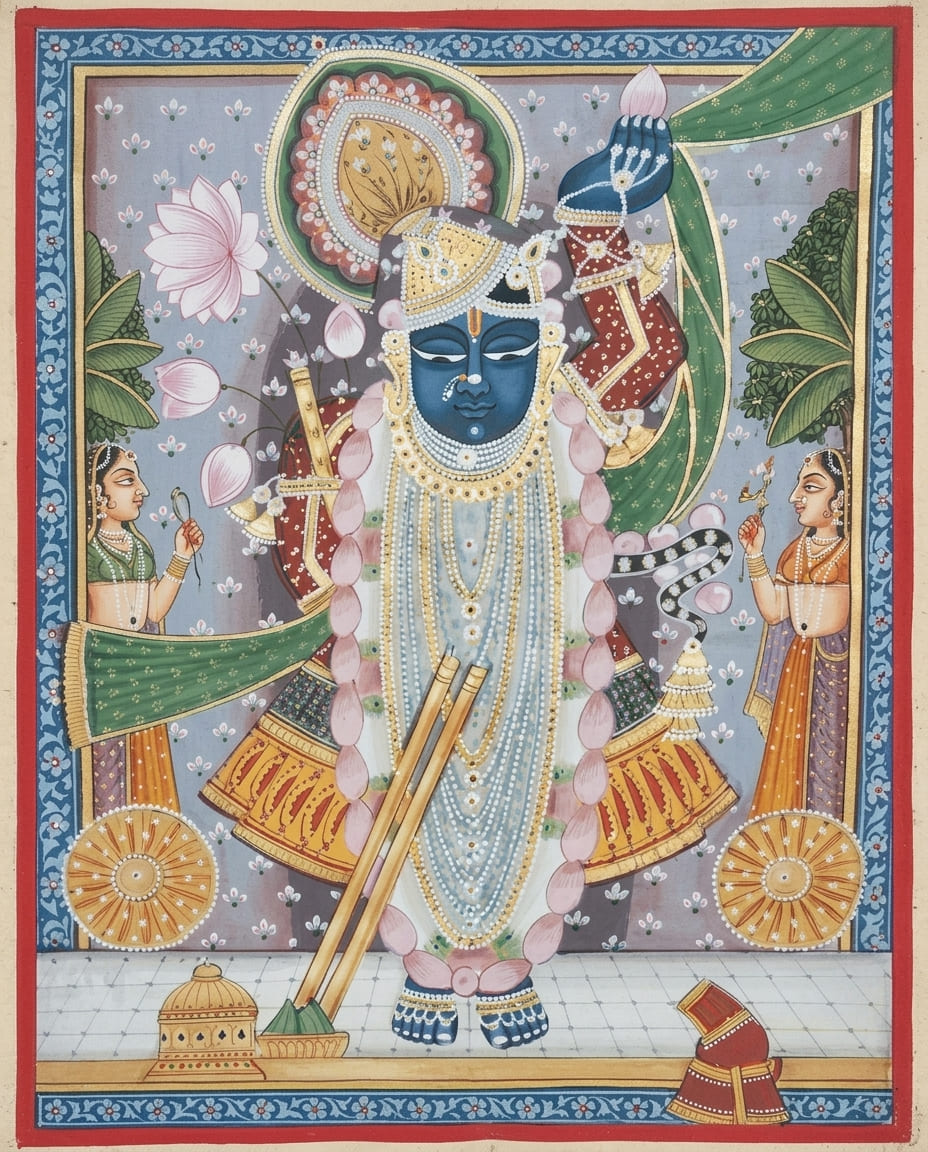
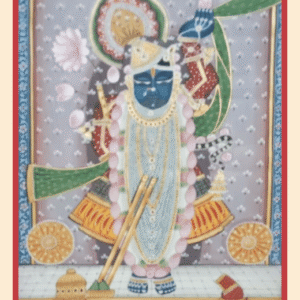
Shrinathji — Lord Krishna depicted as a seven-year-old child lifting the Govardhan Hill — is the most sacred and recognisable subject of Pichwai art. Our Shrinathji Pichwai paintings capture the deity's serene and powerful presence, surrounded by the iconic white and gold lotus motifs, with devotees (gopis) paying obeisance. Ideal for temple rooms, puja spaces, and as the centrepiece of a living room wall.
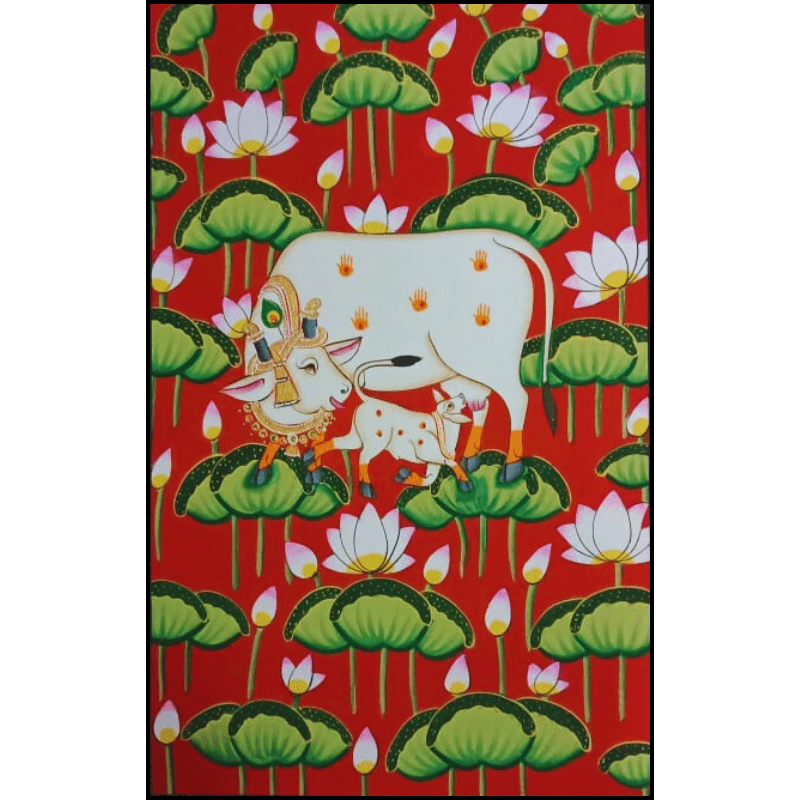
Pichwai Cow Paintings (Kamdhenu)
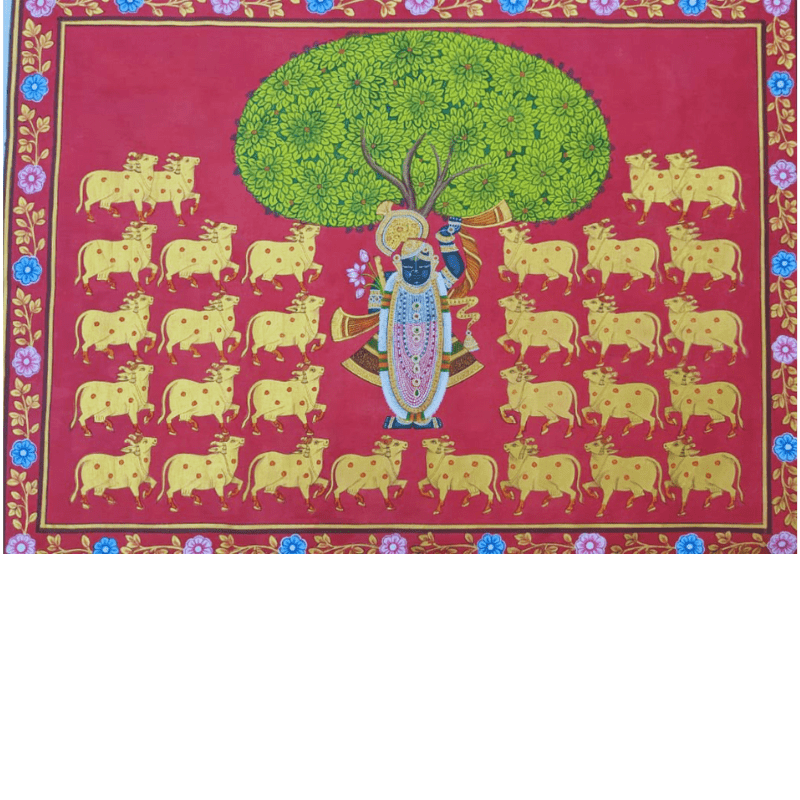
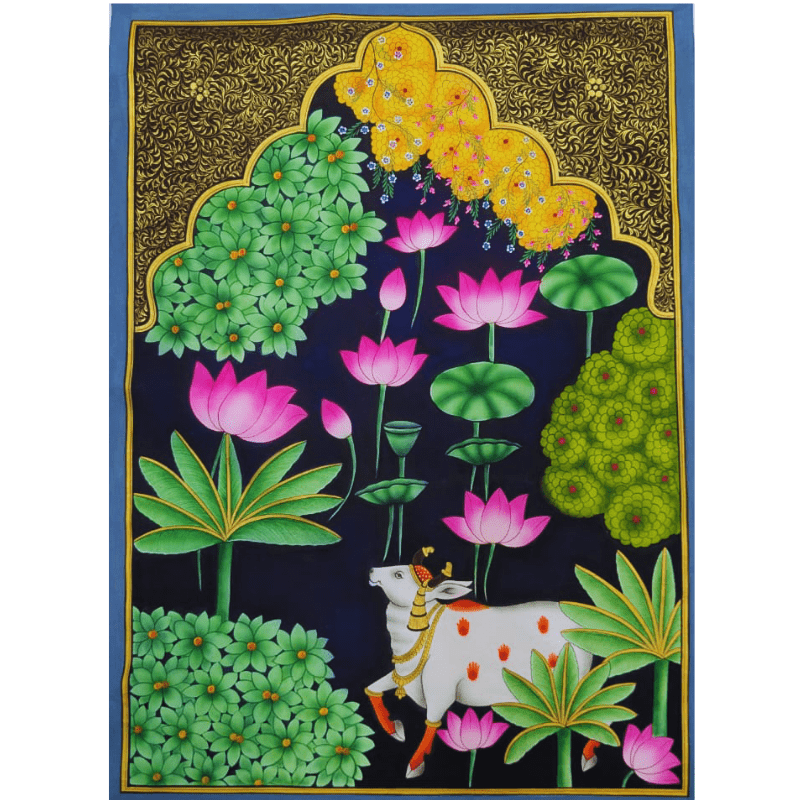
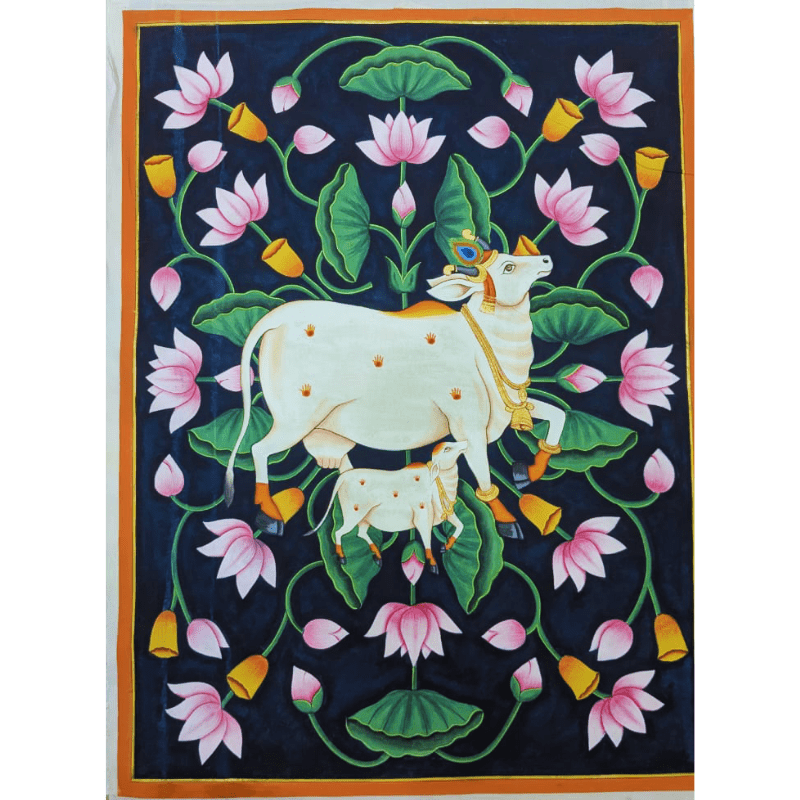
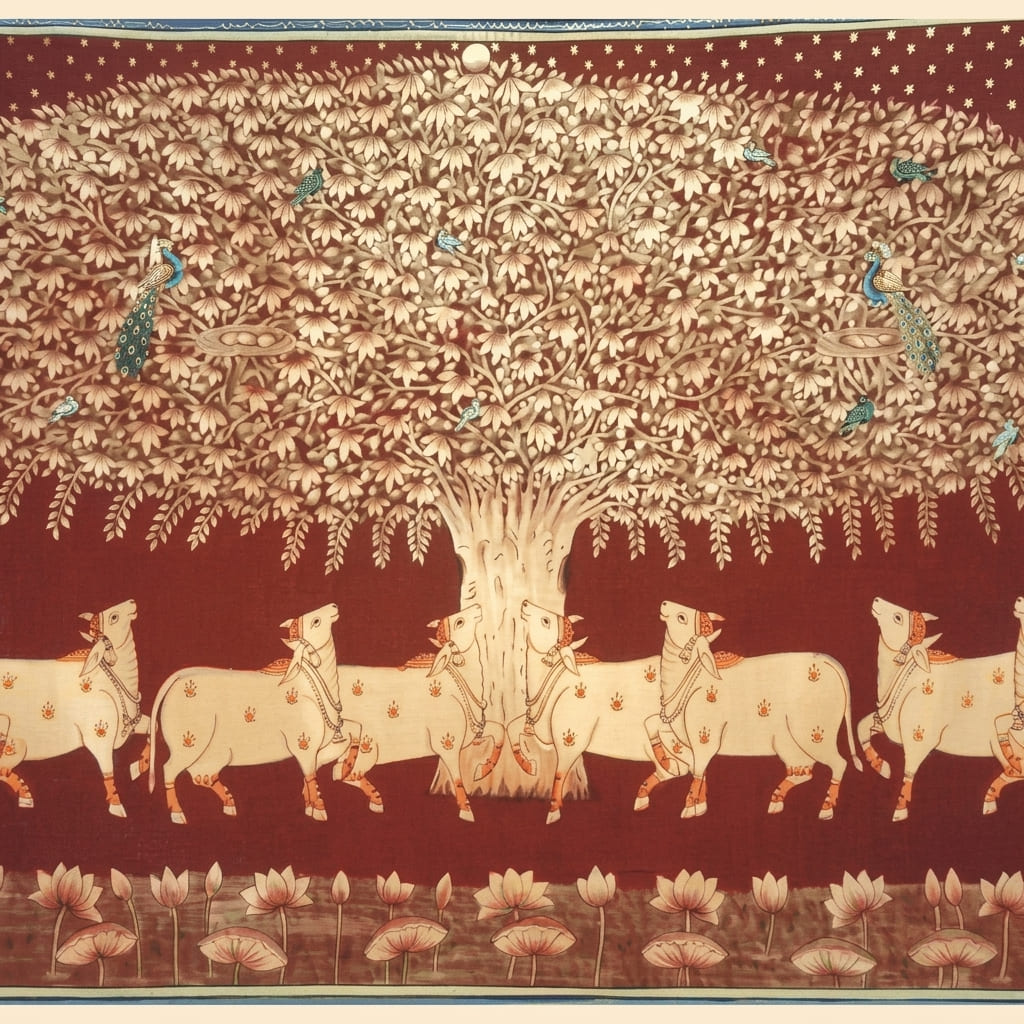
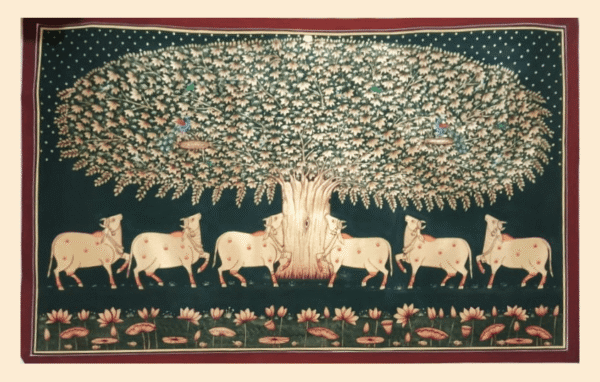
The sacred cow is one of the most symbolic elements in all of Pichwai art. Known as Kamdhenu — the divine wish-fulfilling cow — these animals are inseparably connected to Lord Krishna's identity as Govinda, the protector and nurturer of cows. A Kamdhenu Pichwai painting is believed to bring abundance, prosperity, and positive energy into the home. Our cow Pichwai artworks depict the majestic Kamdhenu adorned with peacock feather ornaments, surrounded by lotus flowers on vibrant red, blue, and green backgrounds.
Lotus Pichwai Paintings
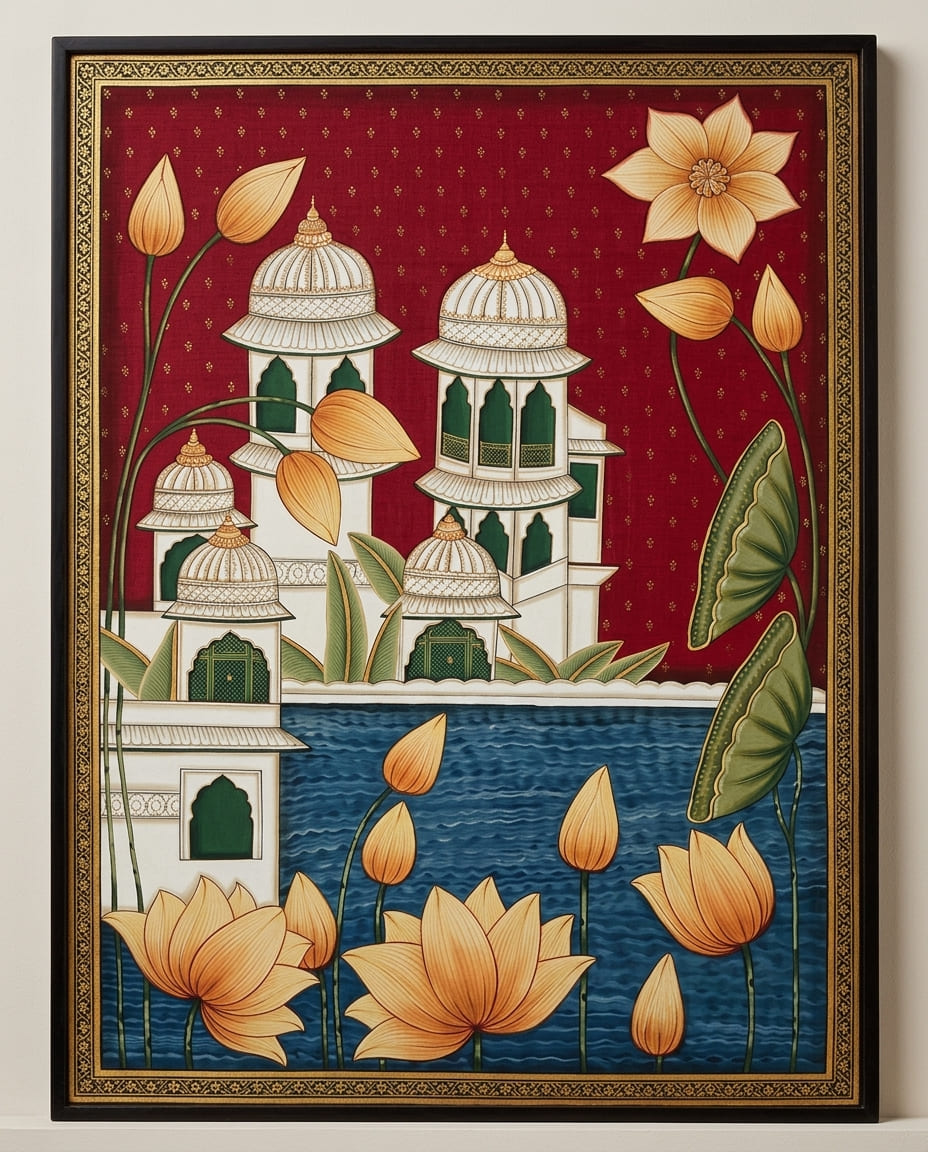
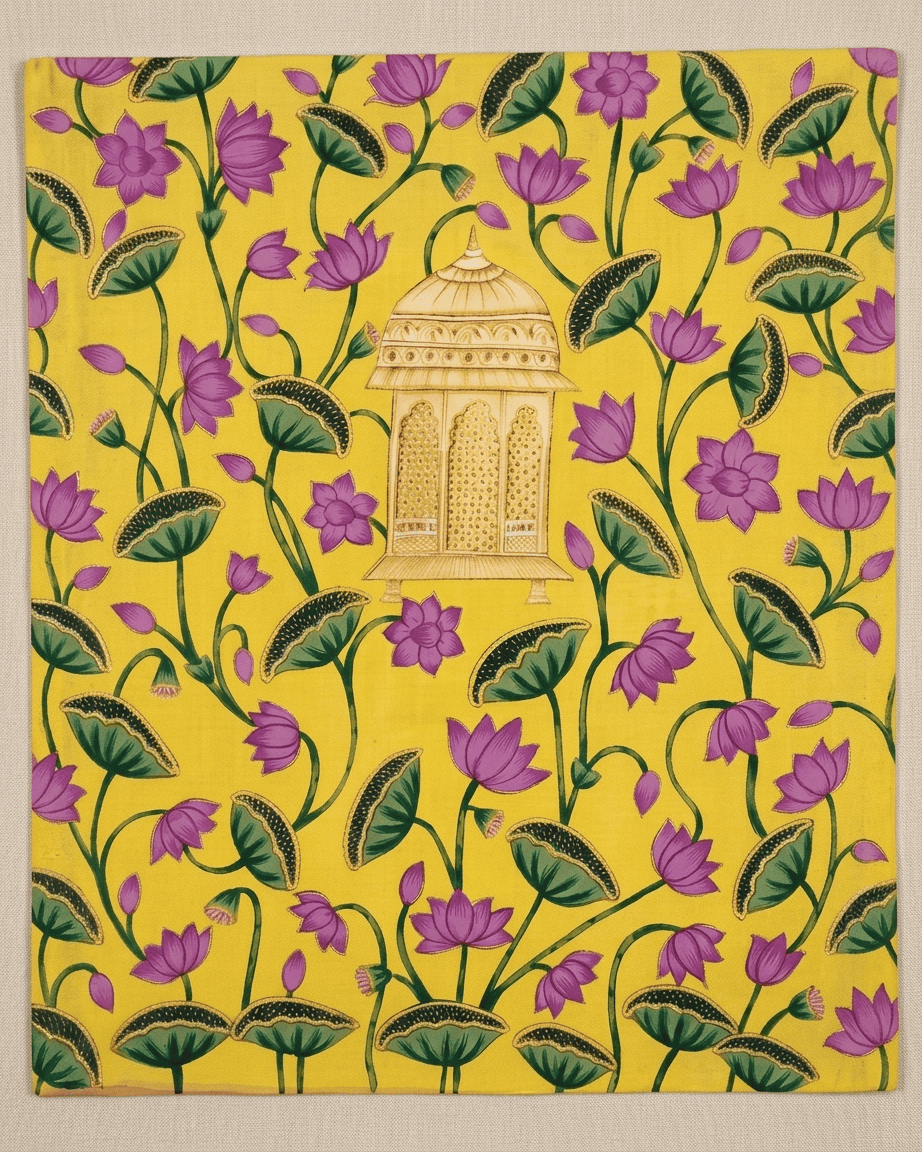
The lotus is perhaps the most recurring motif in all Pichwai paintings. It symbolises purity, divine beauty, and enlightenment. Lotus Pichwai paintings fill the canvas with layer upon layer of blooming white, gold, and red lotus flowers — traditionally the summer Pichwai, hung to offer Lord Shrinathji symbolic coolness. Standalone lotus Pichwai artworks make stunning wall art for living rooms and meditation spaces.
Raas Leela & Krishna Pichwai Art
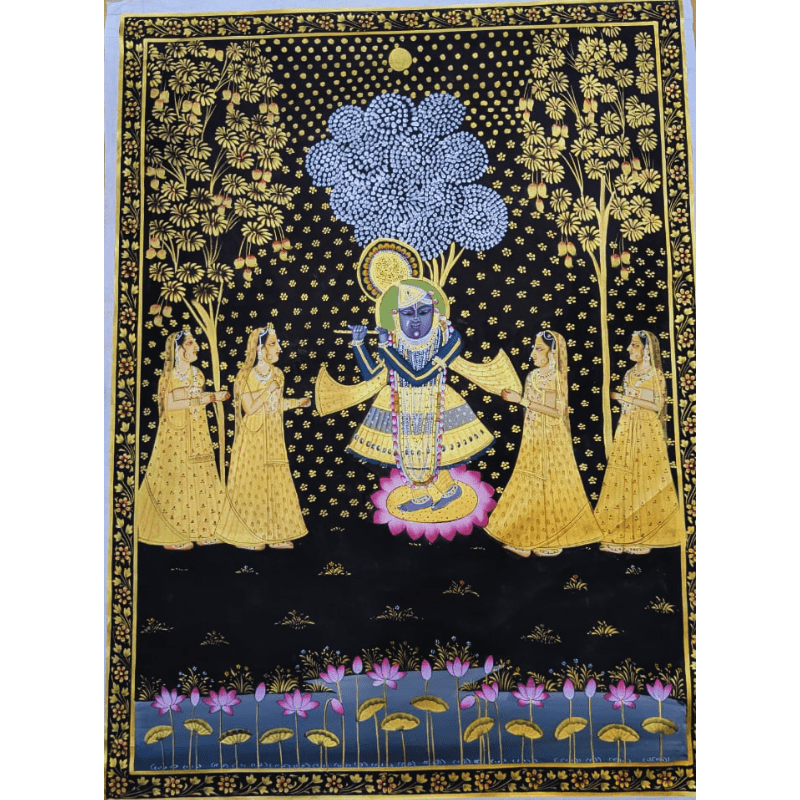
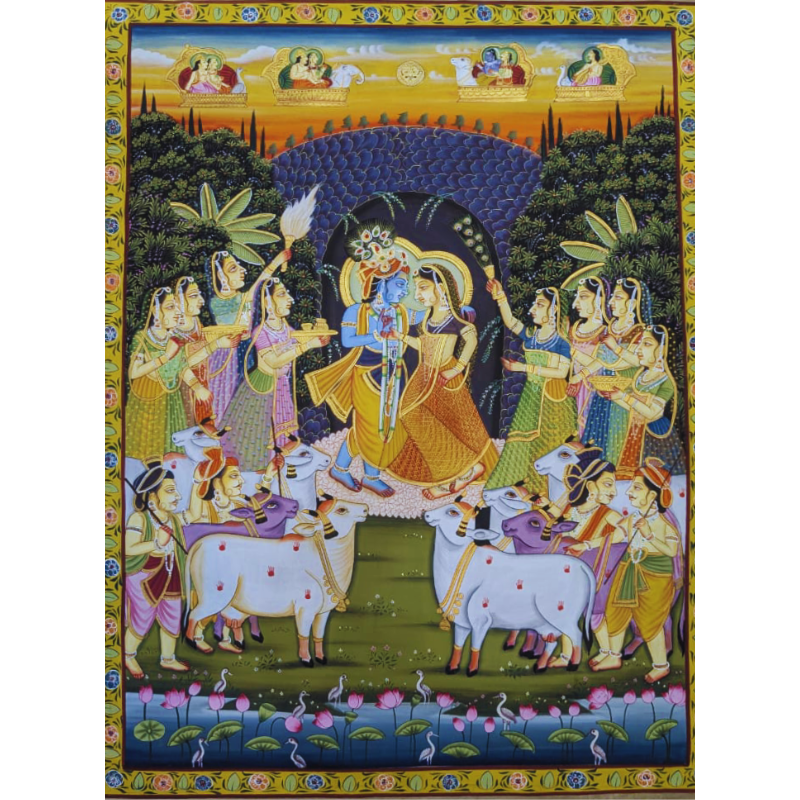
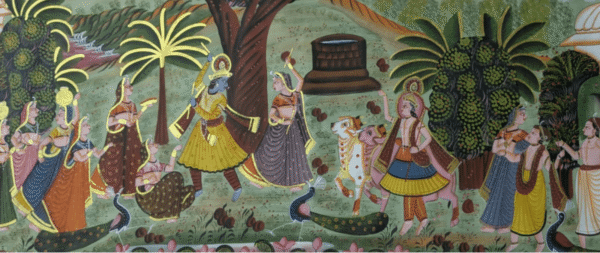
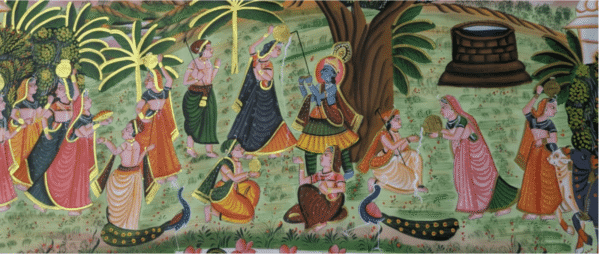
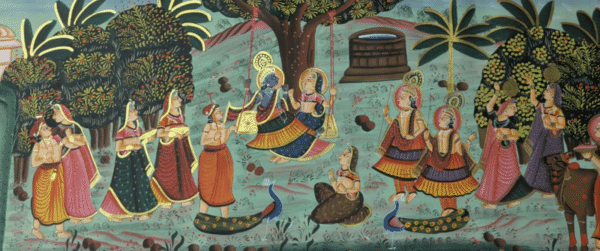
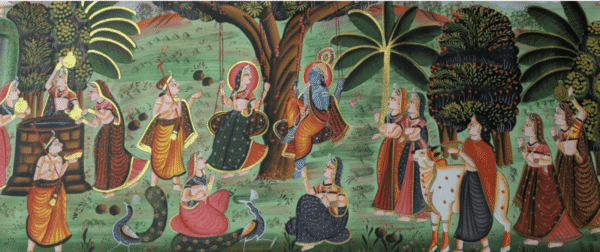
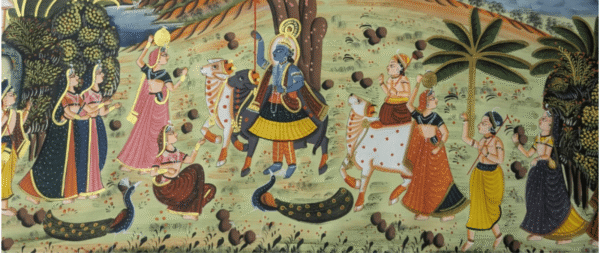
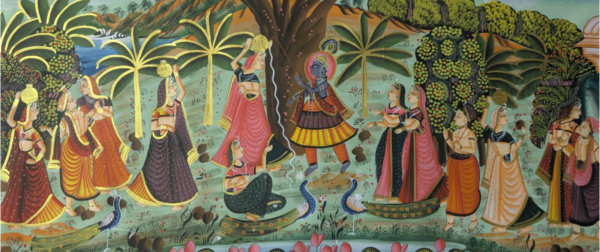
Raas Leela Pichwai paintings depict Lord Krishna's divine dance with the gopis of Vrindavan — one of the most joyous and spiritually significant themes in Indian art. Our Raas Leela and Radha Krishna Pichwai artworks celebrate the eternal divine love between Radha and Krishna, filled with peacocks, lotuses, and the lush greenery of Vrindavan.
Festival Pichwai Paintings — Janmashtami, Annakoot & Peacock Themes
Festival Pichwai paintings are among the most vibrant and collectible in the entire tradition. Janmashtami Pichwais celebrate the birth of Lord Krishna with a riot of joy, colour, and garland motifs. Annakoot (Govardhan Puja) Pichwais depict the legendary mountain of food offered to the deity — a deeply auspicious composition for the home. Peacock Pichwai paintings, inspired by the Morkuti (monsoon peacock) festival, capture the breathtaking dance of peacocks in the rain and are among our most loved artworks for living rooms and gifting. Each festival theme makes a deeply meaningful, seasonally appropriate addition to your collection.
Pichwai Painting on Cloth vs Canvas — What to Choose?
Pichwai painting on cloth (traditionally handspun cotton cloth, treated with natural starch) is the most authentic and traditional format. The texture gives colours a warm, organic quality and an heirloom character prized by serious art collectors. Canvas Pichwais are suited to modern home interiors — they can be hung directly without framing and are slightly more durable. Wall panels are the most contemporary format, ideal for large accent walls. All three formats are available in our collection, sizes ranging from 12×12 inches to 72×36 inches. Custom sizes available on request.
Where to Hang Your Pichwai Painting — Ideal Spaces
Pichwai paintings are among the most versatile forms of traditional Indian art when it comes to placement. Here are the most popular choices:
Puja Room or Temple Space: A Shrinathji Pichwai painting hung behind a home deity recreates the sacred atmosphere of the Nathdwara temple within your home — the most traditional and spiritually powerful placement.
Living Room: A large Pichwai painting — particularly a Raas Leela, lotus, or Kamdhenu cow Pichwai — makes a breathtaking focal point above a sofa or on a feature wall. The vibrant colours and intricate detail create a richness that modern art often cannot match.
Bedroom: Smaller Pichwai paintings with serene themes (lotus, peacock, or a singular Shrinathji portrait) bring peace and calm to bedroom spaces.
Office & Corporate Spaces: Large-format Pichwai wall panels work especially well as a statement of Indian cultural identity.
Gifting: A handmade Pichwai is one of the most meaningful and culturally rich gifts for weddings, housewarmings, Diwali, and corporate gifting.
Pichwai Paintings for Your Living Room
"Pichwai painting for living room" is one of the most searched queries in Indian home décor — and with good reason. A large Pichwai transforms any living room into a space of cultural richness and spiritual warmth. For medium living rooms (12×14 ft), a 24×36 to 36×48 inch Kamdhenu cow or Kamal Talai Pichwai above the sofa creates a commanding focal point without overwhelming the space. For large living rooms (14×18 ft and above), a 48×36 to 72×36 inch Raas Leela or multi-panel Gold Foil Darshan becomes the centrepiece that anchors the entire room. When matching to your living room style, earthy and warm interior palettes work best with lotus and Shrinathji themes, while bold, maximalist interiors are elevated by multi-cow and festival Pichwai compositions.
How to Tell a Genuine Handmade Pichwai from a Printed Copy
The biggest concern for first-time buyers is accidentally purchasing a digital print disguised as a handmade artwork. Here is exactly what to look for to protect your investment:
Uneven, organic brushwork visible under magnification — authentic Pichwai shows the individual brushstroke personality of the artist, not the uniform dot-matrix pattern of a printer.
Slight cloth texture showing through the pigment layers — the weave of the handspun cotton is visible under the paint in genuine pieces; printed canvas has a mechanically uniform surface.
Weight and hand-feel of cotton cloth vs. a synthetic print substrate — real Pichwai cloth has the natural weight and drape of handspun cotton; printed substrates feel plastic or paper-thin.
Certificate of Authenticity with the artist's signature and materials list — every Rupasya Pichwai comes with a signed certificate naming the artist, their lineage, the pigments used, and the completion date.
Minor colour variations between pieces — hand-painted originals are never identical; two pieces of the same composition will always differ subtly. Prints are pixel-perfect clones.
The Nathdwara Artists Behind Our Pichwai
Pichwai painting is not a skill learned in weeks or even years — it is a tradition passed through generations of artisan families in Nathdwara and Udaipur, Rajasthan. Our artists have trained for 10 to 20 years before their work reaches the standard Rupasya requires. Our lead artists, Jagish Prasad & Manoj Sharma, are third-generation Nathdwara masters whose families have painted for the Shrinathji temple tradition for over 60 years. They carry techniques, colour formulations, and compositional knowledge that cannot be found in any book.
Stone pigments — made from lapis lazuli, saffron, indigo, zinc white, and charcoal black — are ground and prepared by hand. Squirrel-hair brushes, each with a few dozen individual hairs, are used for the finest detailing: the expression in Shrinathji's eyes, the individual petals of a lotus, the delicate ornamentation of a sacred cow. Pure 24K gold foil is applied by hand to divine highlights. A single large Pichwai painting takes between 20 and 60 days to complete. Every Rupasya Pichwai comes with a Certificate of Authenticity bearing the artist's name, signature, materials used, dimensions, and date of completion.
Questions? Talk directly to our team: WhatsApp +91 6367053010
Frequently Asked Questions About Pichwai Paintings
What is a Pichwai painting?
A Pichwai painting is a traditional Indian art form that originated over 400 years ago in Nathdwara, Rajasthan. The word Pichwai means fabric wall hanging (pich = back, wai = cloth). These paintings were created as large devotional backdrops for the idol of Shrinathji, a form of Lord Krishna, in the Nathdwara temple. Today, Pichwai paintings (also spelled pichhwai, pichvai, or pichhavai) are prized as wall art for homes, offices, and spiritual spaces.
Is Pichwai painting GI-tagged?
Yes. Pichwai painting received the Geographical Indication (GI) tag in 2022, officially recognising it as a traditional art form uniquely originating from Nathdwara, Rajasthan. All paintings at Rupasya are sourced from GI-designated artisan families in Nathdwara and Udaipur.
Where can I buy authentic handmade Pichwai paintings online?
You can buy 100% authentic, handmade Pichwai paintings online at Rupasya (rupasya.com/pichwai-paintings). All our Pichwai artworks are made by master artisans from Nathdwara and Udaipur, Rajasthan, using traditional natural stone pigments and gold foil. We offer free shipping across India and worldwide shipping on request.
How much does a Pichwai painting cost?
Pichwai painting prices at Rupasya start from around Rs 6,700 for smaller pieces and go up to Rs 40,000 or more for large, elaborate handmade works. The price depends on size, complexity, gold foil use, and base material (cloth, canvas, or wall panel).
What is the difference between a Pichwai and a Nathdwara painting?
Pichwai paintings are large devotional cloth backdrops originally designed to hang behind the Shrinathji deity in the Nathdwara temple. Nathdwara paintings include smaller, highly detailed works directly depicting the face or swaroop of Shrinathji. All Pichwai art is Nathdwara art, but not all Nathdwara art is Pichwai.
What materials are used in making Pichwai paintings?
Traditional Pichwai paintings are made on handspun starched cotton cloth or handmade paper. Artists use natural stone pigments from minerals and plants — indigo, saffron, zinc white, and charcoal black. Fine squirrel-hair brushes are used for detailing. Many works include 24K pure gold foil for a divine luminous effect.